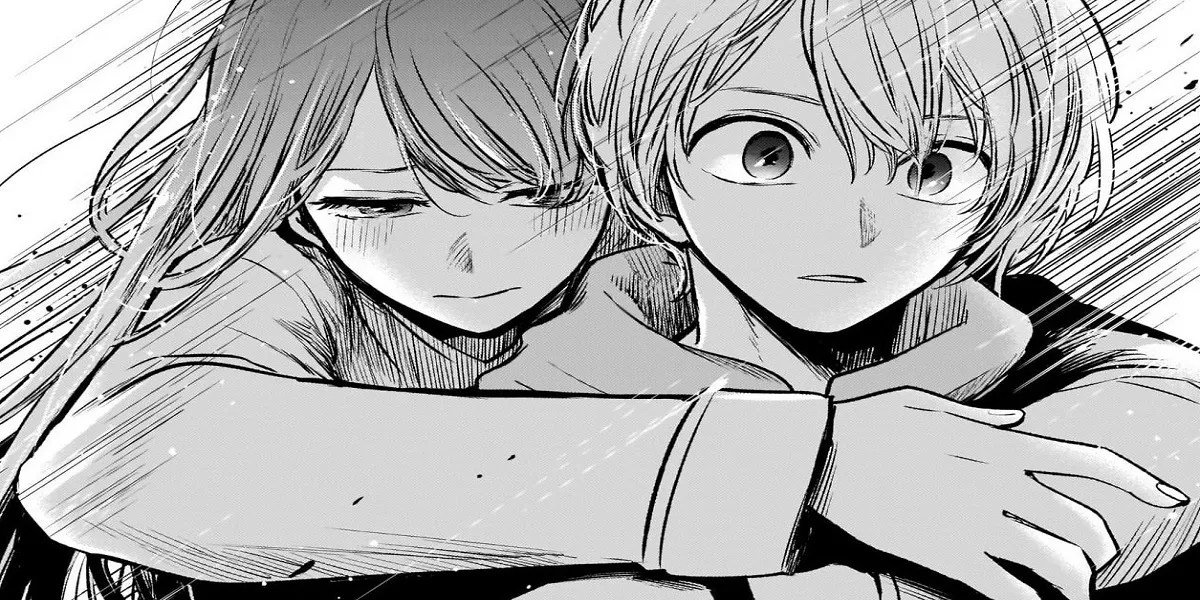
If you've landed here wondering about Sakura Haruno's role in Oshi no Ko, let's clarify upfront: Sakura Haruno, the iconic kunoichi from Naruto, does not appear in the world of Oshi no Ko. It's easy to conflate beloved characters across the vast anime landscape, especially given the popularity of both series, but Oshi no Ko carves its own unique, often dark, path through the idol industry, populated by its own compelling cast and a story that has captivated millions.
While Sakura Haruno is absent, the universe of Oshi no Ko is rich with complex characters, gripping drama, and a narrative that masterfully blends idol glitz with the "dark seedy underbelly" of entertainment. Far from a simple idol story, it evolves into a psychological exploration centered on revenge, sacrifice, and the enduring power of hope. If you're keen to understand the true heart of this groundbreaking series, from its controversial ending to its unforgettable characters, you've come to the right place.
The True Narrative of Oshi no Ko: Beyond Idol Tropes
Oshi no Ko took the manga world by storm, spanning 11 story arcs across 16 volumes and concluding with its 166th chapter. The journey, which began in April 2020 and wrapped up in November 2024, delivers a "tragic and bittersweet" ending that has sparked intense debate among fans. It's a testament to the series' depth that it can evoke such strong emotions.
The overarching story begins with the shocking murder of beloved idol Ai Hoshino, setting in motion a complex plot of revenge. This singular event becomes the catalyst for nearly every major development within the series, as her twin children, Aqua and Ruby, navigate the treacherous entertainment world. To truly grasp the series' impact, it's essential to dive deeper into the core premise of Oshi no Ko and its groundbreaking narrative.
Aqua Hoshino's Relentless Pursuit of Justice
At the heart of Oshi no Ko's revenge plot is Aqua Hoshino, Ai's son, reborn with the memories of a past life. His singular focus for much of the series is to avenge his mother's death by exposing and eliminating his biological father, Hikaru Kamiki. This quest drives many of Aqua's decisions, often pushing him to the brink.
Aqua meticulously orchestrates "The 15 Year Lie," a biopic designed to reveal the truth behind Ai's life and her murderer. This ambitious project becomes a central stage for his final confrontation. To fully understand the intricate web he weaves, you'll want to explore Aqua Hoshino's complex journey of revenge and its ultimate cost.
The Climax of "The 15 Year Lie" and Hikaru Kamiki's Exposure
The first screening of "The 15 Year Lie" is a pivotal moment, forcing Aqua into a direct confrontation with Hikaru Kamiki, who finally admits his involvement in Ai's murder. However, the revelation doesn't end there; Aqua presents Hikaru with a DVD containing Ai's confession of genuinely loving him, leaving Hikaru wracked with guilt. This deep dive into the film's significance helps explain so much of Aqua's plan. Unpack the significance and impact of 'The 15 Year Lie' biopic within the series.
Aqua’s pursuit eventually leads him to theorize that Hikaru alone couldn't have been responsible for all the related murders, suspecting a former member of the original B-Komachi. This revelation broadens the scope of the conspiracy, adding layers of complexity to the already intense narrative. To truly grasp the antagonist's role, it's important to understand the true nature of Hikaru Kamiki, the shadowy antagonist. Meanwhile, understanding the original victim is just as crucial; you can revisit the tragic yet pivotal life and death of Ai Hoshino, the ultimate idol.
Unmasking the Deceivers: Nino's Plot and Akane's Sacrifice
The series' dramatic conclusion isn't solely focused on Aqua's revenge; other characters also play critical roles in the unraveling of the truth. A character named Nino, driven by her profound grief for Ai, attempts to murder Ruby Hoshino, believing Ruby has surpassed her mother's skill. This shocking plot highlights the dangerous obsessions that can fester within the entertainment industry.
During her attempt, Nino stabs Akane, who was cosplaying as Ruby and wearing a protective vest. Nino's exposed plan not only saves Ruby but also leads to Nino revealing Hikaru's extensive manipulation and involvement in various murders to Ruby and Akane. For a full account of these events, you can delve into Nino's shocking role and her connection to the series' darker truths. Furthermore, discover Akane Kurokawa's crucial actions and sacrifices in the climactic final arc.
Aqua's Ultimate Sacrifice and Ruby's Enduring Legacy
The final confrontation between Aqua and Hikaru is perhaps the most shocking and controversial moment of the entire series. Aqua, understanding that leaving his father alive would perpetually endanger Ruby, makes an unthinkable choice. In a shocking act of sacrifice, Aqua stabs himself before throwing both himself and Hikaru off a cliff into the water.
Hikaru initially survives but is choked by Aqua while bleeding out, eventually dying with visions of his victims pulling him into the depths. Aqua’s last conscious thought reveals his true motivation: "The reason I lived... not for revenge. It was to protect my own sister. That's why I was born as a twin... Thank goodness this time, I can die before you." This profound moment redefines his entire journey. For a complete analysis of this pivotal event, get the full breakdown of Aqua Hoshino's controversial fate and the meaning behind his sacrifice.
The Aftermath and Ruby's Shining Future
Years later, the narrative shifts to Ruby, now carrying two white stars in her eyes, symbolizing both her mother Ai's "pure joy" and her brother Aqua's spirit. Despite her grief, Ruby becomes a highly successful idol, adopting a persona that hides her true feelings but inspires hope in her audience. B-Komachi, now consisting of Ruby, Mem-Cho, and a new member, performs at the Tokyo Dome, fulfilling Ai Hoshino's ultimate dream. You can witness Ruby Hoshino's powerful transformation into a leading idol, embodying hope. For more on the group's journey, see how B-Komachi finally achieves Ai Hoshino's dream at the Tokyo Dome.
The manga's final chapter, titled "Star," ends with Ruby asking Ai and Aqua to watch over her as she steps into a promising future, largely attributed to their influence and sacrifice. Her choice to perform and "lie about not being sad" becomes a "necessary lie" that offers light and inspiration, even amidst her profound grief.
Fan Reactions and the Bittersweet Legacy
The ending of Oshi no Ko sparked considerable debate, with many fans feeling it was "rushed." Aqua's decision to die pursuing revenge, rather than letting it go, surprised some, leading to criticism for author Aka Akasaka. However, proponents argue that Aqua's death served a crucial purpose, enabling Ruby's character arc to surpass her mother's tragic fate and embody the manga's ultimate message of hope triumphing over despair. To understand the full spectrum of opinions, understand the polarized fan reactions to the Oshi no Ko ending and its lasting impact.
Ultimately, while Sakura Haruno might not be a part of this world, Oshi no Ko offers a deep, complex, and emotionally charged narrative that continues to resonate. It challenges perceptions of the entertainment industry and explores profound themes of love, loss, and the lengths one will go for family. The series solidifies its place as a significant work, leaving a lasting impression long after its final chapter.